


The Department of Economics at Government College Women University Sialkot (GCWUS) is committed to excellence in economics education, research, and community engagement. Guided by its vision of developing analytically strong, critical, and innovative graduates, the department integrates economic theory with quantitative techniques and practical applications. Its key strengths include applied economics, econometrics, development economics, energy and environmental economics, and financial economics, with a strong emphasis on research, policy analysis, innovation, and real-world economic challenges. The department promotes interdisciplinary learning and collaboration with business, finance, environment, and social sciences, while strengthening outreach and industrial linkages. A distinctive focus on women’s empowerment equips female students with leadership, entrepreneurial, and decision-making skills. Through quality education and research, the department contributes to GCWUS’s mission of empowering women and supporting sustainable socio-economic development at national and global levels.

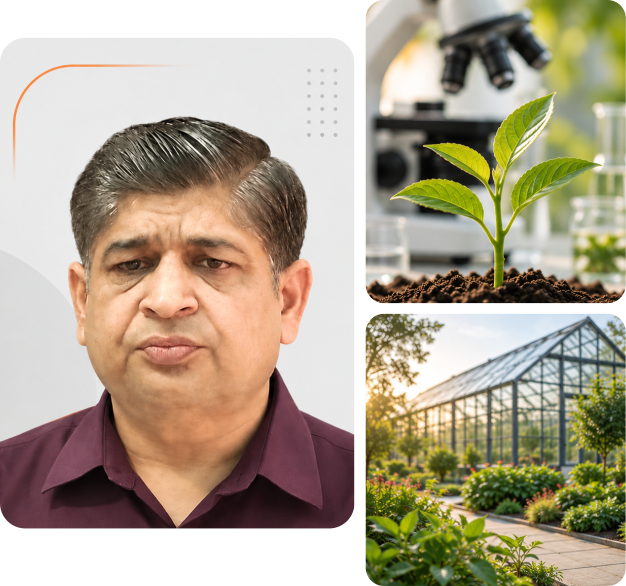
HOD of Economics Department
The Department of Economics is committed to uphold high standards of academic performance through quality education. I welcome students’ community to join us in building human resources with a clear vision of global, ethical and moral values. Our aim is to provide students with the intellectual and analytical tools and skills necessary for being critical thinkers and for using the analytical tools to analyze, confront and solve problems associated with important economic, political and social issues. The courses that we offer are very helpful in preparing our students to be leaders in the society. One of the core missions of the department is to conduct first rated research in Economics. Students will be trained with modern theoretical and quantitative methods of research and will be enabled to pursue lifelong learning opportunities. Their knowledge will facilitate them with a career path in different fields of life. I am confident that with the help and support of my whole staff, our students will acquire knowledge and sustain continuous improvement and innovation to establish our department firmly among Pakistan’s leading Economics Departments and schools..
Prof. Dr. Muhammad Ilyas
Incharge and HOD
m.ilyas@gcwus.edu.pk


Program/s Details
| Program Level | Program Title | Eligibility Criteria |
| BS Level (Undergraduate) |
|
|
| MS / M.Phil. Level (Graduate) | MS Economics |
|
| Ph.D. Level (Postgraduate) | Ph.D. Economics |
|
| 01 | BS Program (/per semester) | Rs. 0.00 PKR |
| 02 | MS Program (/per semester) | Rs. 0.00 PKR |
| 03 | Ph.D. Program (/per semester) | Rs. 0.00 PKR |
- The Department of Economics at Government College Women University Sialkot (GCWUS) organizes a range of departmental activities to promote academic excellence, research, student engagement, leadership, and community development.
- These activities include the International Emerging Scholars Forum (IESF), community development and wellbeing sessions, seminars on food security policy, EU regulations and industrial exports, and women empowerment.
- The department promotes student participation and leadership through the Women in Society of Economics (WISE Society) and the Research and Innovation Club. Students are encouraged to showcase their innovative ideas through the annual Students’ Ideas Exhibition and participate in research training and presentations.
- The department also facilitates workshops and capacity-building activities to strengthen students’ research skills.
- To bridge the gap between theoretical knowledge and practical experience, the department arranges industrial exposure visits, with six visits conducted for MS and PhD students during 2025–2026, along with its first Industrial CEO Talk under WISE.
- Other initiatives include academic collaboration with national and international institutions, virtual academic forums, Clean and Green Initiatives, and policy consultancy services for the Punjab Agricultural Marketing Regulatory Authority (PAMRA).
- These activities support students’ professional development, research capacity, industry engagement, and awareness of contemporary economic and social issues.
STRATEGIC GROWTH STATEMENT (DEPARTMENTAL LEVEL):
3–5 Year Strategic Roadmap for the Department of EconomicsThe Department of Economics at GCWUS aims to strengthen its position as a center of excellence in economics education, applied research, innovation, and policy engagement. Over the next 3–5 years, the department will pursue the following strategic priorities:
- Establish specialized research facilities, including an Applied Economics and Econometrics Lab equipped with computers and statistical/econometric software such as Stata, EViews, R, Python, and relevant data platforms.
- Develop a Socio-Economic, Energy and Environmental Research Unit focusing on climate change, renewable energy, sustainability, poverty, gender, and development challenges.
- Initiate regular faculty development workshops in econometrics, data analytics, AI-assisted research, research methodology, academic writing, grant writing, and publication strategies.
- Strengthen curriculum mapping with national higher education requirements and emerging labor-market needs.
- Launch structured faculty development programs through short courses, certifications, research seminars, visiting lectures, and collaborative research projects.
- Encourage faculty to develop interdisciplinary research projects with departments of Business, Finance, Environmental Sciences, Computer Science, and Social Sciences.
- Establish an annual Economics Research Seminar Series and a student research conference.
- Increase faculty and student engagement with national research organizations, government institutions, think tanks, financial institutions, and development agencies.
- Establish a departmental Quality Enhancement and Accreditation Committee to monitor academic standards, learning outcomes, curriculum alignment, faculty development, student progression, and graduate employability.
- Pursue relevant accreditation/quality-assurance milestones applicable to Economics and coordinate with HEC and relevant accreditation bodies. Where interdisciplinary computing components are formally introduced, ensure compliance with applicable NCEAC requirements; PEC accreditation will be pursued only where an eligible engineering program is offered.
- Develop stronger industry and institutional linkages with banks, financial institutions, government departments, research organizations, development agencies, chambers of commerce, and policy institutions.
- Introduce internships, field projects, policy briefs, case studies, and employer-engaged learning opportunities to improve students' practical skills.
- Expand the research infrastructure into specialized thematic facilities such as a Digital Economics and Data Analytics Lab, Energy and Environmental Economics Lab, and Policy Research and Impact Unit, subject to resources and institutional approval.
- Integrate emerging areas into teaching and research, including AI and economics, digital finance and fintech, platform economies, climate economics, carbon markets, renewable energy transitions, ESG, behavioral economics, big-data analytics, and the future of work.
- Develop postgraduate research capacity through collaborative research clusters, external research grants, policy-oriented projects, and international co-authorship.
- Establish an annual GCWUS Economics and Policy Forum bringing together academics, policymakers, industry representatives, development organizations, and students.
- Develop measurable graduate-employability indicators and use employer/alumni feedback to continuously update curricula and skills development.
Expected Outcomes
By the end of the 3–5 year period, the department aims to have stronger research infrastructure, digitally skilled and professionally developed faculty, increased quality publications and externally funded research, active national and international academic collaborations, stronger industry linkages, improved student employability, and a well-established culture of research and innovation. The roadmap will also reinforce the university's mission of women's empowerment, leadership development, sustainable economic growth, and contribution to national and global socio-economic challenges.
FUTURE SCOPE & CAREER PROSPECTS (STUDENT LEVEL):
The Department of Economics at GCWUS prepares students for diverse careers by combining strong foundations in economic theory with quantitative analysis, research, digital skills, and practical exposure. Graduates can pursue careers as economists, economic and research analysts, policy analysts, data analysts, financial analysts, banking and finance professionals, development-sector officers, government officials, and research associates in public, private, financial, development, and international organizations. Emerging areas such as digital finance, data analytics, AI and economics, environmental and energy economics, sustainability, fintech, and policy research further expand career opportunities.
The department will strengthen employability through internships, industry-led seminars, career workshops, field projects, research assignments, and hands-on training in statistical and econometric software. Students will be encouraged to pursue relevant professional certifications in data analytics, financial analysis, and digital skills. Entrepreneurship and innovation will be supported through university incubation facilities, business-plan competitions, mentoring, and startup development activities.
Students interested in academia and research will receive guidance for MPhil/MS and PhD pathways, research publications, conference participation, and research-methodology training. Through academic-industry linkages, alumni engagement, and career counseling, the department aims to equip graduates with adaptable skills for Pakistan's evolving labor market and international opportunities.
Contact Details
- Address: Department of Economics, Fatima Jinah Campus, Govt. College Women University Sialkot.
- Tel: 052-9250768 | Ext. 100
- Email: m.ilyas@gcwus.edu.pk

Department Tour
Campus on a tour designed for prospective graduate and professional students. You will see how our university like, facilities, studenst and life in this university. Meet our graduate admissions representative to learn more about our graduate programs and decide what it the best for you.



News & Events
Activities
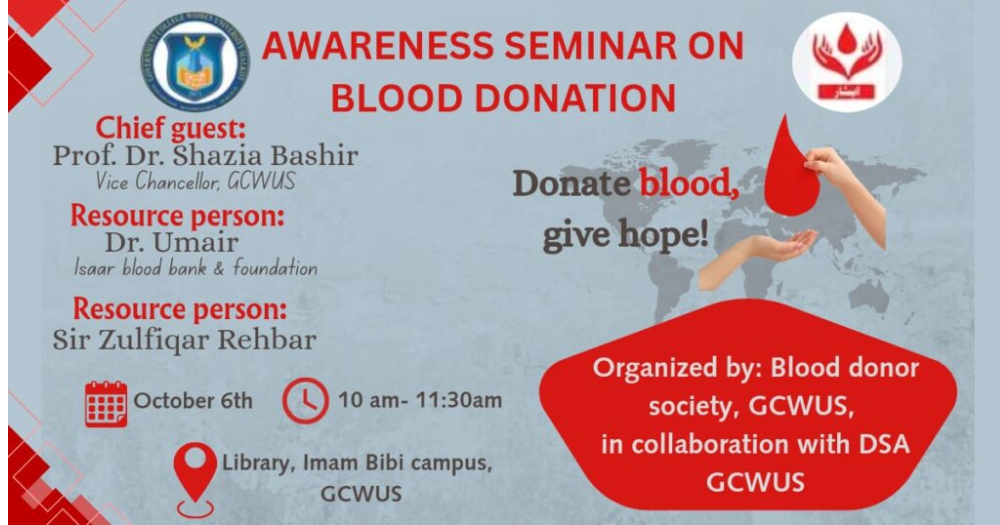
Blood Donation and Camp for Blood Sugar and Blood Group Detection
xyz.....

Making your site friendly
Seamlessly visualize quality ellectual capital without superior collaboration and idea tically

This guide is designed.
Seamlessly visualize quality ellectual capital without superior collaboration and idea tically